


Grab - Taxi & Food Delivery
Grab Holdings
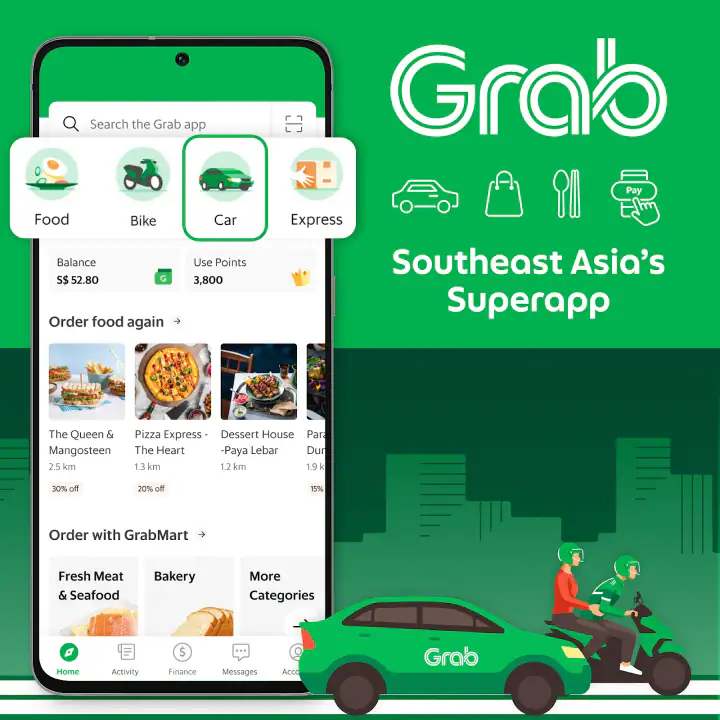
When I need to get across town and also sort out dinner, I prefer not to jump between several unrelated services. That is the situation where Grab makes the most sense to me. It is a travel and local app from Grab Holdings that brings taxi booking, food delivery, and grocery delivery into one place. I have found it most useful when the day is already busy and I want fewer separate tasks to manage.
My experience with it is not simply “tap a button and everything is solved.” The real value comes from the complete workflow: deciding what I need, entering the right pickup or delivery details, checking the available option, handing the request over to a driver or courier, and then dealing with the final handoff. Grab is strong when those stages connect smoothly. It is less convincing when location details, availability, or timing become complicated.
The app is free and suitable for Everyone, which makes it approachable for a wide range of users. It has been available since May 30, 2013, and its current version is 5.400.0, with support beginning at Android 7.0. Its average rating is 4.8 from around 16 million ratings, and it has passed 100 million installs. Those figures suggest that Grab is not a niche experiment; it is an established everyday tool for people who use app-based transport and delivery.
From a rushed morning to a completed order
Starting with the actual need
I think Grab works best when I begin with a clear, practical goal rather than browsing aimlessly. Maybe I am staying in an unfamiliar area, my usual transport is unavailable, or I need groceries delivered before I return home. The app’s all-in-one design lets me start from that need instead of first deciding which separate service to open.
For a ride, the important first step is entering the pickup point accurately. I do not rely blindly on the map marker, especially around hotels, shopping centers, apartment compounds, or large office buildings. A nearby road can look correct on screen while still leaving the driver at the wrong entrance. I check the pin and make the pickup wording as specific as possible before requesting the trip.
Related News

Why WhatsApp Messenger Still Makes Everyday Communication Feel Easy

Jurassic World: The Game Is the Better Dino Tycoon for Strategic Players

Threads in Real Life: Who Should Join, Lurk, or Leave

How SHEIN Turned Shopping Into an Endless Content Feed

How to Make Fortnite Feel Smarter on Mobile

Should You Switch to Microsoft Outlook on Mobile?
For food or groceries, the starting condition changes. The destination is usually my home, hotel, or workplace, but the useful detail is the handoff point. I consider whether the courier will need a lobby, reception desk, security gate, or a particular building entrance. A delivery can be accepted and prepared correctly yet still become frustrating if the final few meters are unclear.
The small details at the beginning often decide whether the whole Grab workflow feels effortless or awkward. This is one of the main lessons I took from using a combined transport and delivery app: the convenience is not only in the large service categories, but in how carefully the request is prepared.
Choosing a ride without rushing the decision
When I request a taxi, I give myself a moment to review the available choice rather than tapping immediately. I check the pickup point, destination, and the route shown in the app. This is particularly important when several places share a similar name or when a destination has multiple entrances. A quick review can prevent a much longer correction later.
Gallery
The ride flow is convenient for ordinary journeys, airport approaches, visits to friends, and short trips where flagging down a vehicle would be inconvenient. It is also useful when I do not know the local streets well. Having the destination entered before the journey reduces the need to explain directions verbally, which is valuable when there is a language barrier or when traffic makes conversation difficult.
Still, I would not treat the app as a guarantee that a car will always be immediately available or that the route will be ideal. Local traffic, demand, road closures, and the accuracy of the pickup point can all affect the experience. Grab helps organize the request, but it cannot remove the unpredictability of a real city.
Building a food or grocery order with fewer mistakes
For food delivery, I usually begin by deciding whether I want speed, a familiar meal, or a broader selection. The app is convenient because I can complete the search, selection, and delivery request in one environment. I pay attention to the restaurant or shop details, the chosen items, and the delivery address before confirming. This sounds basic, but it is easy to overlook when ordering while distracted.
Grocery delivery has a different rhythm from ordering a prepared meal. I use it for routine household needs or for situations where leaving the house would interrupt the day. The useful trade-off is convenience versus control: a grocery trip lets me inspect alternatives personally, while an app order saves time but makes accurate item selection and delivery instructions more important.
One practical habit I recommend is checking the order as soon as it arrives, before putting everything away. For a meal, I can quickly make sure the main items are present. For groceries, an immediate check makes it easier to notice a missing or unsuitable item while the order details are still fresh. This is not a special feature; it is simply the best way I found to close the loop instead of assuming the handoff was perfect.
The handoffs that matter more than the tapping
Grab’s workflow contains several handoffs. First, I hand the request from myself to the platform by entering the trip or order. Then the request moves to a driver or courier. Finally, the physical handoff happens at the pickup point or delivery address. Each transition can introduce friction, and the app can only solve some of it.
For rides, the most important handoff is between the digital pickup location and the real curb. I try to stand where the driver can safely stop and where I can recognize the vehicle without blocking traffic. At a busy mall or station, I avoid describing the location only as “outside.” A named entrance or visible landmark is much more useful.
For food and groceries, I treat the delivery address as a set of instructions rather than just a map point. If the building is confusing, I make the entrance and floor information clear. I also keep my phone available around the expected arrival period. A courier may reach the general area while still needing help with the final entrance, and a delayed response can turn a simple delivery into repeated calls or waiting.
This is where Grab differs from ordering directly from a local restaurant or calling a taxi. The app gives me a structured digital trail and a single place to manage the request, but it also adds another layer between me and the person completing the job. That layer is helpful for organization, yet it means I need to monitor the app and communicate clearly when circumstances change.
What the completed journey feels like
A successful ride ends with a straightforward arrival: I reach the correct destination without needing to negotiate the entire route from scratch. A successful food or grocery order ends when the correct items reach the intended handoff point and I can move on with my day. In both cases, the result is more than speed. It is the reduction of small decisions that would otherwise take time.
For example, imagine I am working from a hotel in a city I do not know. In the afternoon, I enter the hotel’s correct pickup entrance, request a taxi to a meeting, and check the route before leaving. Later, I use the same app to arrange dinner at the hotel. I select the restaurant, confirm the room or lobby details, and watch for the courier. The benefit is not that every stage is invisible; it is that transport and delivery follow a familiar pattern instead of requiring separate accounts, searches, and routines.
That continuity is the strongest reason I would recommend Grab to a friend who lives in or frequently visits an area where its services are useful. The app is especially practical for travelers, busy workers, families managing errands, and people who want transport and delivery in the same general tool. It can also be helpful for someone who does not own a car and needs occasional access to both rides and household deliveries.
Where the flow breaks down
The first weak point is location accuracy. A map pin can be technically close and still be practically wrong. Large buildings, gated communities, one-way streets, and crowded public places create problems that no simple confirmation screen can fully prevent. I consider this a user responsibility as much as an app limitation, but it affects the overall experience all the same.
The second weak point is availability. An all-in-one app may show several services, but that does not mean every service is equally convenient in every area or at every moment. A ride may take longer than expected, or a preferred food and grocery option may not fit my timing. When the schedule is critical, I leave extra time rather than assuming the app will remove all uncertainty.
The third issue is the handoff itself. A restaurant can prepare an order, a courier can arrive nearby, and I can still have a poor experience if the building entrance is unclear. Likewise, a taxi journey can be correctly booked but delayed by a pickup point that is inaccessible. I have learned to view the app as a coordination tool, not a substitute for practical communication.
There is also a broader trade-off compared with traditional alternatives. Calling a local taxi can be better when I already know a trusted driver or need a very specific arrangement. Ordering directly from a restaurant may be preferable when I want a direct relationship with that business. Shopping in person is better when I need to compare fresh products or choose exact replacements. Grab is strongest when convenience and centralization matter more than maximum control.
Who should use it, and who should skip it
I would recommend Grab to someone who regularly combines local travel with meals or grocery errands, especially if switching between separate services feels wasteful. It is also a sensible choice for visitors who want one familiar workflow for getting around and arranging deliveries. The free entry point makes it easy to try without committing to a paid app.
I would be more cautious recommending it to someone who dislikes app-based coordination, has unreliable mobile access, or needs absolute certainty about arrival times. A person who prefers choosing groceries personally may find delivery too restrictive, while someone who only needs an occasional taxi may prefer a local alternative that already works well for them.
Privacy and notification habits are also worth considering in everyday use. I keep the app’s alerts manageable so that ride updates and delivery messages remain useful rather than becoming background noise. I also review addresses before placing an order, particularly when I am ordering for somebody else or using a temporary location. These habits make the combined-service design feel more controlled.
My practical verdict after using the full workflow
Grab is not merely a taxi button with food added around it. Its real strength is the connection between several common local tasks: moving from one place to another, arranging a meal, and obtaining groceries without opening a different service for every need. Grab Holdings has built an app that feels most valuable when I am managing a busy day and want one recognizable process from request to handoff.
I appreciate the way it reduces administrative effort, but I do not ignore the points where I still have to think. I need to choose the correct entrance, check the destination, watch the timing, and be ready for the final exchange. Once I accept that responsibility, the app becomes a dependable convenience rather than a magical solution.
With an Everyone content rating, a mature release history, a current version of 5.400.0, and support for Android 7.0 and later, it is accessible to many Android users. Its broad adoption and 4.8 average rating reinforce my impression that it has become a familiar part of daily transport and delivery routines. Even so, popularity does not make every local situation identical.
My recommendation is simple: choose Grab when you value one connected workflow for rides, meals, and groceries, but keep a backup plan when timing, pickup access, or product choice is critical. Used that way, it is a practical Travel & Local app that can save real effort without pretending that the messy parts of city life have disappeared.
FAQs for Grab - Taxi & Food Delivery
What services does Grab offer?
Grab is a versatile app that provides multiple services, including ride-hailing, food delivery, and package delivery. Whether you need a quick ride across town, want to order a meal from your favorite restaurant, or send a parcel, Grab can accommodate these needs through a single platform, making it incredibly convenient.
Is Grab available in my area?
Grab primarily operates in Southeast Asia, covering countries like Singapore, Malaysia, Indonesia, Thailand, Vietnam, and the Philippines. Availability can vary within these regions, so it’s best to check the app or the official website to see if Grab services are offered in your specific location.
How does Grab ensure the safety of its users?
Grab has implemented several safety measures, such as real-time ride tracking, an emergency button, and driver background checks. Additionally, users can share their ride details with friends and family, ensuring peace of mind while using the service. The app continually updates its safety features to enhance user security.
What payment methods does Grab accept?
Grab offers flexible payment options, including cash, credit/debit cards, and GrabPay, the app’s own digital wallet. Users can easily link their preferred payment method within the app, providing a seamless and hassle-free transaction experience for rides and deliveries.
How does Grab's loyalty program work?
GrabRewards is the app’s loyalty program, where users earn points with each transaction. These points can be redeemed for discounts, vouchers, and exclusive offers. The program is designed to reward frequent users, encouraging continued engagement with the app’s various services.
Pros
- User-friendly interface with easy navigation.
- Wide range of services in one app.
- Reliable real-time tracking feature.
- Offers multiple payment options.
- Frequent promotions and discounts.
Cons
- Customer support can be slow at times.
- Occasional app crashes during use.
- High demand can lead to surge pricing.
- Limited service areas in rural regions.
- Driver availability can vary widely.


